
ASTM A516 Grade 70 Low Temperature Plate Supplier in India
Chiranjiv Steel Centre is an ASTM A516 Grade 70 low temperature plate stockist, supplying plate for pressure vessels and storage equipment that work at low temperatures. Ready stock of 3 mm to 20 mm plate sits at our Taloja and Kalamboli stockyards in Navi Mumbai. Thicker plate, up to 100 mm, comes on order, and so does normalized plate at the size you need.
Every plate ships with an EN 10204:2004 Type 3.1 mill test certificate. We cut to size, and each cut piece keeps the heat number of the plate it came from.
A vessel’s minimum design metal temperature (MDMT) comes from its service conditions. Plate thickness and delivery condition set the starting point for how cold that MDMT can be before impact testing is needed.
On this Page
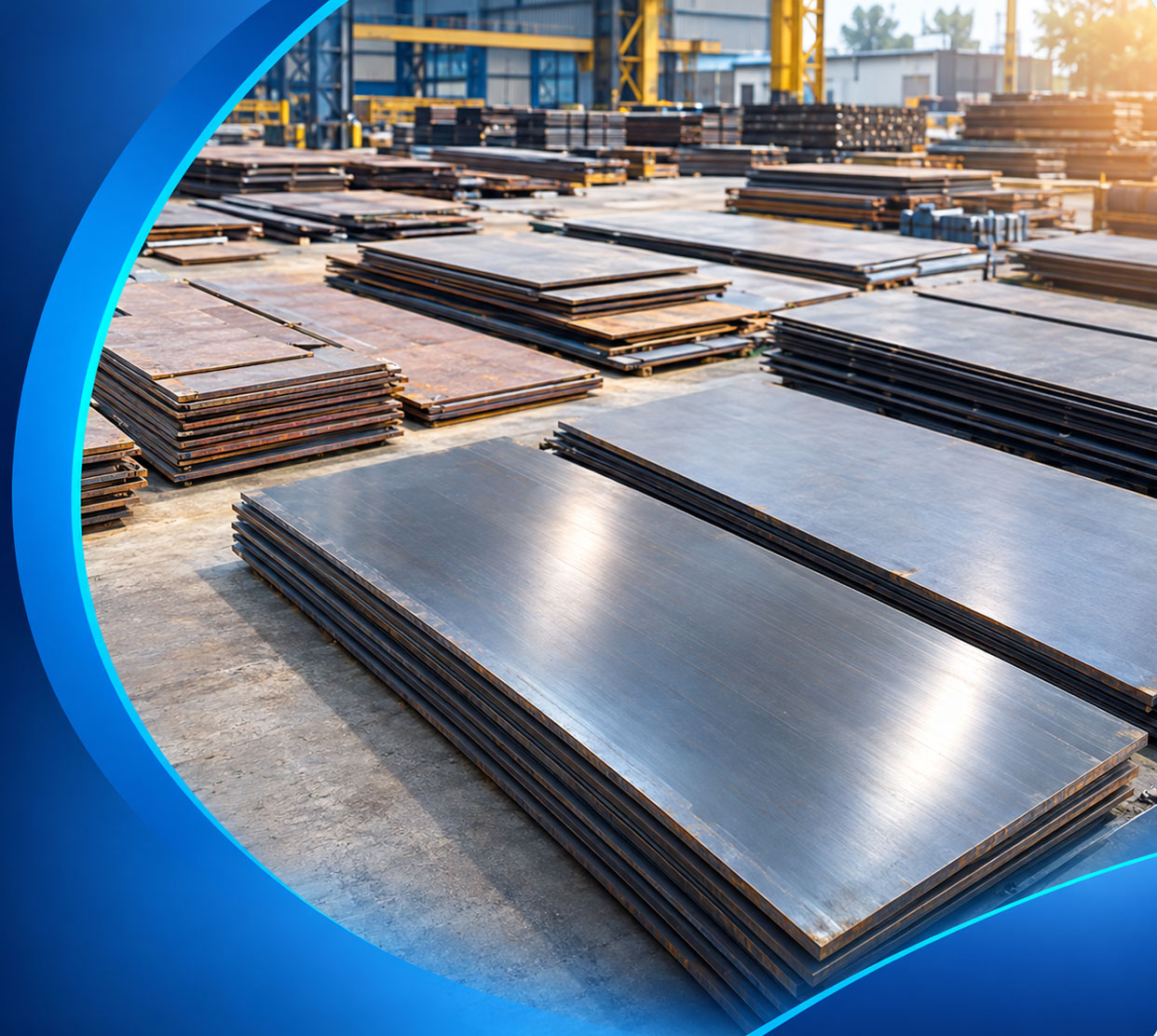
A516 Grade 70 Low Temperature Plate Supply
| Parameter | Supply |
|---|---|
| Standard | ASTM A516 Grade 70, dual certified to ASME SA-516 Grade 70 where the mill certificate covers both |
| Thickness | 3 mm to 20 mm from stock, up to 100 mm on order |
| Width | 1250 mm and 1500 mm |
| Length | 5000 mm and 6300 mm |
| Delivery condition | As-rolled from stock. Normalized on order, and always normalized above 40 mm |
| Certification | EN 10204:2004 Type 3.1 mill test certificate with every plate |
| Processing | Cut to size, with heat number traceability on every piece |
| Order size | No minimum order |
| Dispatch | 2 to 3 working days on stock sizes, delivery across India |
ASTM A516 Grade 70 plate carries the same chemistry and tensile requirements in both delivery conditions. For plate 40 mm and under, the choice between as-rolled and normalized comes down to toughness at your MDMT. Plate over 40 mm is always normalized.
Low Temperature Limits for A516 Grade 70 Plate
SA-516 Grade 70 plate for low temperature applications gets its low temperature limit from one of four routes under ASME Section VIII Division 1.
| Route | Cold limit | What it depends on |
|---|---|---|
| Default exemption | −29 °C | Governing thickness up to 25 mm, a hydrostatic test on the completed vessel, a design temperature between −29 °C and 345 °C, and no controlling shock or cyclic loads |
| Exemption curve, as-rolled plate | Curve B, set by thickness | Reads warmer than normalized plate of the same thickness |
| Exemption curve, normalized plate | Curve D, set by thickness | About −36 °C at 24 mm. Curve D’s coldest value is −48 °C. Below −29 °C the welds must also meet the code’s impact test rules |
| Impact tested plate | The test temperature on the certificate | Plate ordered from the mill with Charpy V-notch testing, and welds qualified with impact tests. Not part of our supply range |
Our full ready stock range, 3 mm to 20 mm, falls inside the 25 mm thickness limit of the default route.
Thicker plate, or a design temperature colder than −29 °C, moves the check onto the exemption curves. On those curves the delivery condition changes the answer. Normalized plate on Curve D reaches a colder limit than as-rolled plate on Curve B at the same thickness, and thinner plate reads the same or colder on both.
Designers can take a further reduction through low-stress and post-weld heat treatment credits. Your vessel designer confirms which route applies to each part, and the plate order follows from that.
Request a quote with the MDMT and thickness from your drawing, and we will confirm stock and price.
A516 Grade 70 Plate at −46 °C
A516 Grade 70 has no built-in −46 °C rating. The first route to it is plate ordered with Charpy V-notch impact tests at −46 °C. The mill certificate must show Charpy results that meet the required impact energy, and the welding procedure must also be qualified with impact tests. Project specifications in oil and gas often call impact tested plate low temperature carbon steel, or LTCS.
The second is normalized plate at the thin end of the range. Curve D is coldest at −48 °C for the thinnest plate and warms as thickness grows, reading about −36 °C by 24 mm. Send us your thickness and MDMT and we will tell you what the curve gives. Below −29 °C the welding procedure must be qualified with impact tests, unless no weld pass is thicker than 6 mm and the filler metal is classified by impact testing at or below the MDMT.
A516 Grade 70 is a carbon steel for moderate and lower temperature service. Cryogenic duty uses 9 percent nickel steel or austenitic stainless steel.
ASTM A516 Grade 70 Normalized Plate for Low Temperature Service
Where A516 Grade 70 Low Temperature
Fabricators use this plate for equipment that holds pressure in cold conditions or cools down in operation.
- LPG and propane storage vessels, where a fast pressure release chills the shell
- Separators, knock-out drums and columns in refinery and gas processing units
- Heat exchanger shells on chilled or refrigerated process streams
- Vessels in refrigeration and gas chilling packages
If the equipment also handles wet sour gas, the specification may call for A516 Grade 70 HIC tested plate, with hydrogen induced cracking tests on the heat.
Send your sizes and quantity for a price on A516 Grade 70 low temperature plate.
Looking for
ASTM A516 Grade 70 Low Temperature Plate
What to Send With a Low Temperature Plate Enquiry
An enquiry with these details gets a firm answer fastest.
• Thickness, width, length and quantity
• Minimum design metal temperature (MDMT) from the drawing
• Delivery condition: as-rolled or normalized
• Any impact testing or HIC testing named in the project specification
Every plate carries its chemistry and tensile results on the Type 3.1 certificate, traced by heat number to each cut piece. Once we have seen these details, we confirm stock and price.
ASTM A516 Grade 70 Plate FAQs
Can A516 Grade 70 plate be used at −46 °C?
Yes, when the plate is ordered with Charpy V-notch tests at −46 °C, the certificate shows passing results, and the welding procedure is qualified with impact tests. The thinnest normalized plate can also reach that range on Curve D, provided the welds meet the code’s impact test rules.
What is the lowest temperature for A516 Grade 70 plate without plate impact testing?
On the exemption curves, −48 °C, the coldest value on Curve D, for the thinnest normalized plate. Thicker plate reads warmer, about −36 °C at 24 mm. Design credits can go lower. Below −29 °C the welds must also meet the code’s impact test rules.
Do I need normalized A516 Grade 70 plate for low temperature service?
Not always. Up to 25 mm and down to −29 °C, as-rolled plate usually meets the default route. For colder MDMTs, normalized plate gives a colder limit at the same thickness. Normalizing is always required over 40 mm, and at 40 mm and under when notch toughness tests are ordered, unless you state otherwise.
Is A516 Grade 70 plate suitable for cryogenic service?
No. A516 Grade 70 is a carbon steel for moderate and lower temperature service. Cryogenic vessels use 9 percent nickel steel or austenitic stainless steel.
Can you supply ASTM A516 Grade 70 Charpy tested plate?
No. Charpy tests must be named in the order to the mill and done before the plate ships, so they cannot be added to the certificate of plate already in stock. We supply as-rolled plate from stock and normalized plate on order. Send us your MDMT and thickness and we will confirm what suits your drawing.
Can you supply A516 Grade 70 low temperature plate cut to size with MTC?
Yes. We cut to size from ready stock at Taloja and Kalamboli. Every plate carries the EN 10204:2004 Type 3.1 certificate, and each cut piece keeps the heat number of its parent plate. Dispatch takes 2 to 3 working days on stock sizes.
